

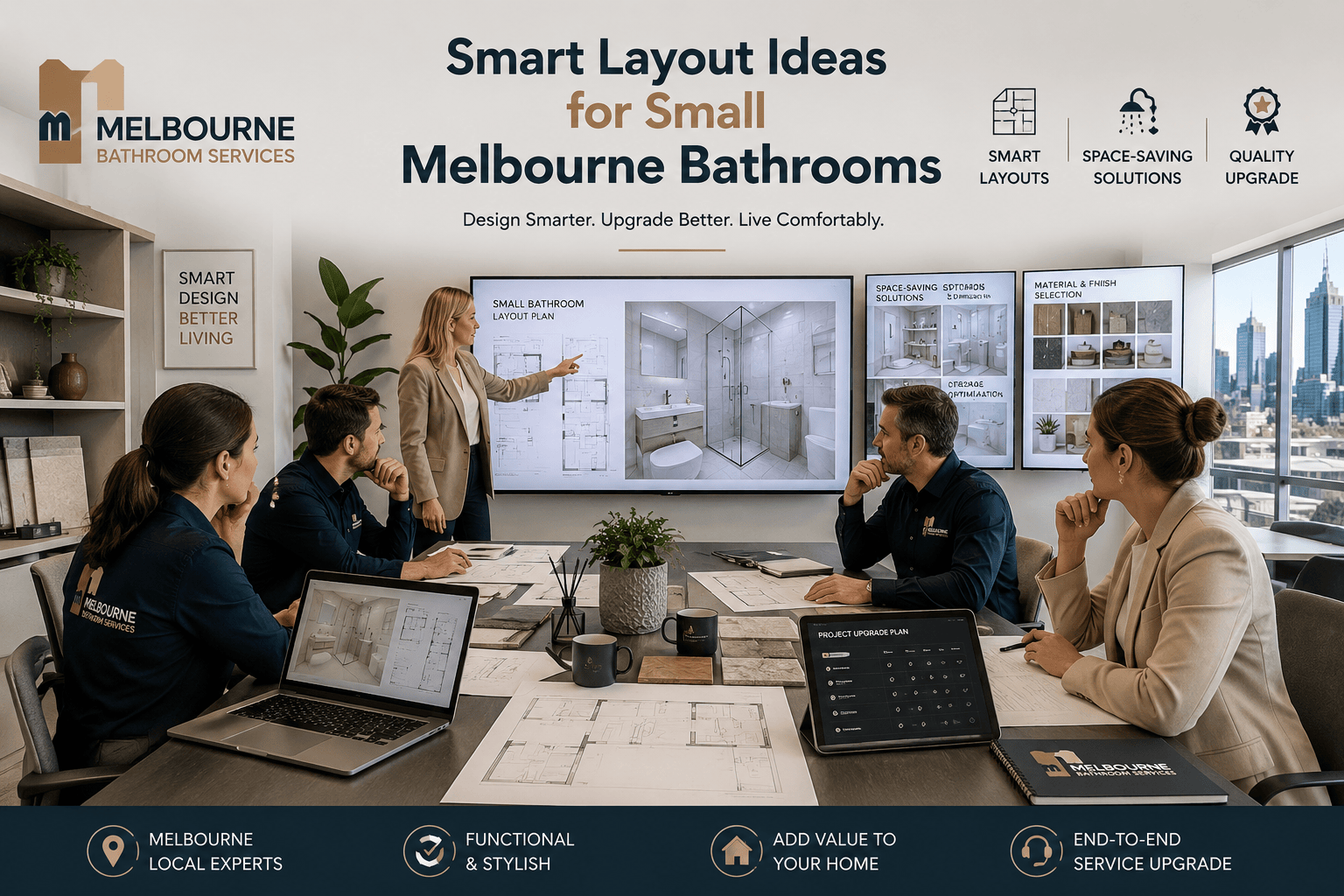
Finding enough space in a compact bathroom can feel like a constant challenge. Limited floor area often leads homeowners to believe they must compromise on comfort, storage, or design. However, with thoughtful planning and the right small bathroom layout ideas, even the most compact bathroom can become highly functional, visually spacious, and enjoyable to use every day.
Back in older Melbourne homes, bathroom layouts tend to reflect past ideas – needs around storage, along with how pipes were managed, looked different decades ago. Upgrading these spaces isn’t simply about changing tiles or replacing faucets. What kicks things off is a fresh look at how space moves: smooth navigation counts just as much as smart function. Thoughtful planning makes every inch useful, so everyday tasks fit comfortably instead of feeling cramped.
From day one at Melbourne Bathroom Masters, real people – homeowners like you – have shaped our work. Not grand makeovers, but smart fixes mattered most to them. What stands out? A small space can work better than a large one – if thought through clearly. Size rarely decides success; how things fit together does.
Start by reviewing your current bathroom layout prior to choosing fixtures like taps, tiles, or cabinets. Movement patterns within the space reveal where changes could enhance daily use. How occupants navigate affects what works best.
Ask yourself:
Answering these questions provides a clear starting point before making any structural decisions.
Bathroom size doesn’t guarantee performance – this belief trips up plenty of homeowners. Poor design tends to squander square footage, even when rooms feel spacious.
Well-planned small bathroom layout ideas focus on creating clear movement paths while ensuring every fixture serves a practical purpose. Strategic placement of showers, toilets, and vanities can make even modest bathrooms feel significantly larger.
For example, relocating a vanity closer to one wall may create a more open entry point, while replacing a swinging door with a sliding cavity door can instantly free up usable floor space.
Choosing the right layout depends on your room dimensions, plumbing locations, and household needs. Some of the most effective compact bathroom layout ideas include:
Built into the wall, these vanities reveal extra floor space, making rooms feel airier and larger. Cleaning becomes easier since nothing blocks access beneath them.
Corner shower enclosures work particularly well in narrow bathrooms where preserving walking space is essential.
Hidden tank designs clear the eye of extra details, so small spaces feel neater. A tidier look emerges when plumbing fades into walls.
Built into the walls, shower niches tuck essentials out of sight while freeing up room on the floor. Recessed spaces make storage easy without adding clutter. Hidden compartments offer access just where needed – without taking up space that matters.
Many successful renovations completed by Melbourne Bathroom Masters combine several of these solutions to create practical bathrooms that suit both growing families and smaller households.
Every property presents different design opportunities. The best small bathroom floor plan ideas should reflect both the home’s architecture and the family’s daily routine.
Position fixtures along one wall to create an uninterrupted walkway while maintaining comfortable circulation throughout the room.
Square layouts provide greater flexibility. Positioning the vanity opposite the entrance often creates a balanced visual perspective while leaving sufficient clearance around the shower.
Compact ensuites benefit from minimalistic layouts, prioritising essential fixtures while incorporating smart storage to prevent clutter.
Apartments often require highly efficient planning because plumbing positions may be fixed. Choosing compact fixtures and frameless glass showers helps maintain openness.
Limited storage quickly makes even attractive bathrooms feel untidy. Thoughtful bathroom storage solutions are therefore essential when renovating smaller spaces.
Some highly effective options include:
Rather than adding multiple cabinets, integrating storage into existing walls often creates a cleaner and more spacious result.
The best ideas focus on improving daily functionality instead of simply updating finishes. Experienced renovators often recommend:
These practical upgrades improve both appearance and usability without requiring additional square footage.
Even well-intentioned renovations can create long-term frustrations if planning is overlooked.
Common mistakes include:
Careful planning during the design phase prevents expensive modifications later while ensuring the finished bathroom remains functional for years to come.
Melbourne homes range from heritage cottages to modern townhouses, and each property presents unique renovation opportunities. Older homes often require creative planning to work around existing plumbing and structural walls, while newer homes may allow greater flexibility.
One advantage of carefully planned small bathroom layout ideas is that they can be customised without compromising the character of the home. A well-designed layout should feel effortless, making everyday routines more comfortable while improving long-term property value.
At Melbourne Bathroom Masters, we often recommend prioritising function before selecting finishes. Beautiful tiles and premium fixtures certainly enhance a bathroom, but the layout determines how enjoyable the space will be for years to come.
Successful renovations usually follow a structured approach rather than rushing into construction.
Measure the room carefully, evaluate plumbing locations, and identify limitations before creating a new layout.
Select fixtures that suit the available floor area while maintaining comfortable movement throughout the room.
Invest in moisture-resistant cabinetry, quality waterproofing, and long-lasting fittings that perform well in Melbourne’s changing climate.
Accurate installation ensures waterproofing, drainage, tiling, and cabinetry work together to deliver lasting performance.
Many homeowners begin renovations with a clear vision but quickly encounter practical challenges. Some of the most common include:
Avoiding these issues during planning leads to a bathroom that is both attractive and highly functional.
Design professionals often use subtle techniques that dramatically improve the feeling of space. Some proven strategies include:
These practical improvements work together to make compact bathrooms appear significantly more open.
If you’re looking for practical small bathroom layout ideas that maximise comfort, storage, and functionality, Melbourne Bathroom Masters can help you plan a renovation tailored to your home’s unique dimensions and lifestyle needs. Speak with our experienced team to discuss your ideas and begin creating a bathroom that feels spacious, organised, and built to last.
A simple layout with wall-mounted fixtures, corner showers, and efficient storage usually maximises available floor space and improves movement.
Yes. Built-in niches, floating vanities, mirrored cabinets, and recessed shelving provide excellent storage without making compact bathrooms feel crowded.
Relocating plumbing can improve functionality, but retaining existing pipe locations may reduce renovation costs where practical.
Light neutral colours, consistent flooring, large mirrors, and natural lighting help create a brighter and more spacious appearance.
Most renovations take between two and four weeks, depending on design complexity, structural work, waterproofing, and material availability.
We’re happy to come up with all the answers required to feed your questions. We are happy to provide the guidance you need throughout your bathroom renovation journey. Our friendly team is here to address your concerns, offer expert advice, and ensure you feel confident every step of the way.